

Ecosteryl decontaminates medical waste
Thanks to its low-pollution solutions and the arrival of new investors, the Mons-based company has every intention of continuing to grow. Discover more about this inspiring success story.
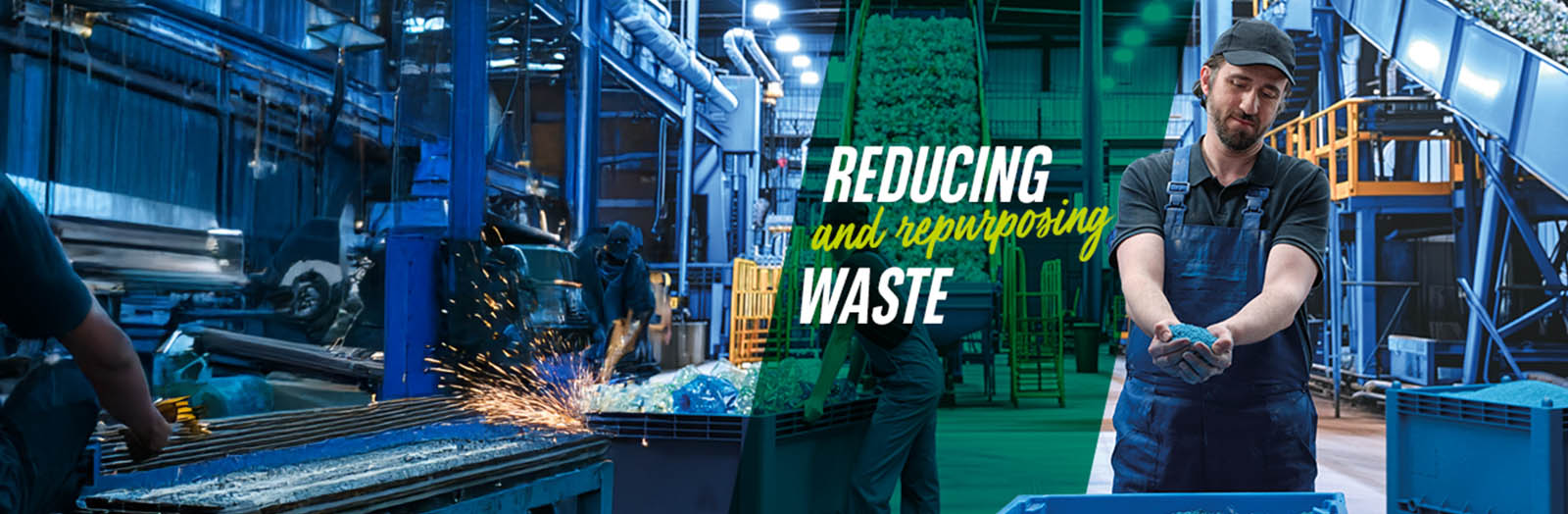
Eradicate the environmental and health problems associated with medical waste on a global scale: Ecosteryl's ambitions match the technical expertise of this Mons-based company. Founded in 1947, its core business was equipment and machinery for the mining industry. Around twenty years ago, it completely reinvented itself by specialising in the treatment of (potentially) infectious waste from the healthcare sector.
A global player with high-profile clients
Today, Ecosteryl is a globally recognised player in its sector, exporting 100% of its production to more than 65 countries. Its customers? Hospitals, of course, but also organisations in the waste recycling sector and international institutions such as the World Health Organisation, the World Bank and the United Nations, as well as cities and states. The company employs around forty people and has an annual turnover of over €20 million.
Medical waste, a critical public health issue
Syringes, dressings, masks, sharp instruments... 15% of medical waste is considered hazardous and therefore requires special treatment. Given that a single hospital bed produces between 0.5 and 3 kg of this waste every day, it's easy to imagine the scale of the problem. The infectious, toxic and sometimes even radioactive risks associated with hazardous medical waste are far from minimal: among other things, it can trigger or accelerate a pandemic, and even give rise to new diseases. Decontamination and recycling of this waste, the only solution to eliminate this health risk, is therefore a global public health issue.
An environmentally responsible process
Direct incineration or autoclaving: these are the two methods used by Ecosteryl's competitors to decontaminate hazardous medical waste. The problem is that these processes are far from being environmentally neutral. Incineration causes significant CO2 emissions and harmful emissions, such as dioxins, and is also energy intensive. And autoclaving requires large amounts of water and energy, again with significant environmental consequences.
It is in this area of the environmental footprint that Ecosteryl has made a difference, thanks to a technological breakthrough developed in collaboration with the University of Paris. The decontamination and recycling process uses microwave and dry heat technology to disinfect hazardous waste. The decontaminated waste is then shredded to reduce its volume, after which it can be processed in the same way as non-hazardous waste. Or better still, it can sorted and recycled.
This process requires very little electricity to operate, and its environmental performance compared to incineration and autoclaving is incomparable in terms of emissions and water consumption.
Too much plastic in medical waste: recycling instead of prevention
Single-use plastic products, equipment and utensils are a fact of life in hospitals. In many cases, this single use is justified, for example for syringes. The problem arises when this waste is directly incinerated. But thanks to pre-treatment, decontaminated and dried waste can be given a second life.
Until now, there has been no machine for this final stage. Ecosteryl's latest development, R-Steryl, fills this gap. It is a unique sorting centre. Placed after the decontamination machines, it can sort decontaminated waste and recycle up to 80% of it. The major players in waste collection and treatment know that recycling is and will be a real challenge in the coming years. Ecosteryl is also positioning itself as a key player in this field, and is investing in a number of analyses to this end.
Private Equity to accelerate development
Despite its size in the medical waste decontamination sector, Ecosteryl has no intention of slowing down. The company intends to continue and accelerate its international growth, and welcomes new investors: BNP Paribas Fortis Private Equity, Wallonie Entreprendre and IMBC, an investment company focused on the Mons, Borinage and Centre regions. Philippe Dufrasne, Chairman of Ecosteryl, comments: “With these new shareholders, we have found the right partners to help us stay ahead of the game and achieve our long-term goals, particularly in terms of ESG (Environmental, Social and Governance) performance.”
A priority to invest in the transition of companies
BNP Paribas Fortis is also enthusiastic about this new project.
“We are particularly proud to support this company, which has developed a unique expertise in the production of cutting-edge equipment specialised in the environmental field. Over the years, Ecosteryl has succeeded in expanding worldwide in a niche market at the intersection of environmental and health issues. This investment is fully in line with our ambition to invest €1 billion in venture capital by 2025, focusing on funds and companies that respect environmental, social and governance criteria,” explains Raf Moons, Head of Private Equity at BNP Paribas Fortis.