

Why is water a strategic and economic issue for businesses?
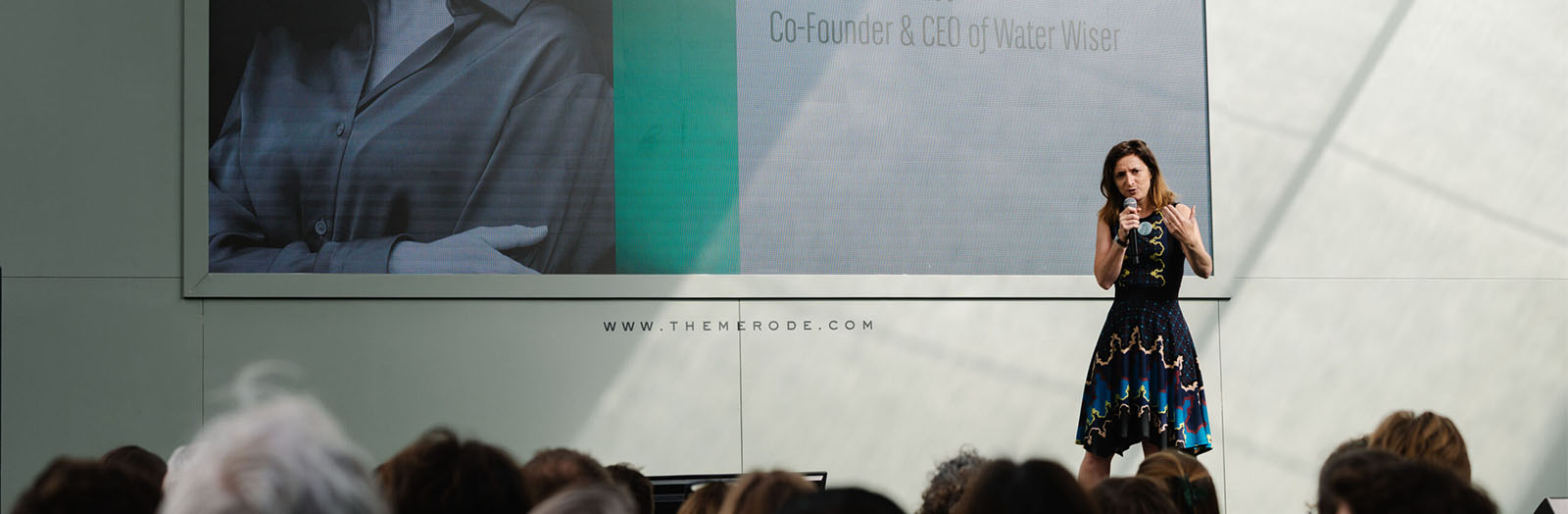
Water seems to flow effortlessly. Yet it is becoming an increasingly underestimated economic chal-lenge for businesses. At BNP Paribas Fortis’ Water for Growth event, water economist Esther Crauser-Delbourg identified water as a strategic resource, critical to the future of companies, industries, and entire value chains. The main challenges are its scarcity and quality. According to the economist, Eu-rope needs an integrated strategy to reduce consumption, in order to properly measure, value, and manage water.
Key points
- 90% of all water in the world is used for the production of economic goods.
- Water is the most traded raw material in the world by volume and is inexpensive, yet it is of-ten overlooked in economic decisions.
- Businesses underestimate the consequences of drought, pollution, or competition for water access.
- Companies can drastically reduce their consumption by better measuring water, reusing it, and optimizing its use.
- Water scarcity and quality are the greatest challenges of this century.
- Belgium is among the European countries with the highest level of water stress.
- The technology exists, but Europe needs an integrated strategy.
“Water is becoming the new capital of the economy”
Water flows from the tap, irrigates crops, and powers factories. “Without water, there is no econo-my,” states Esther Crauser-Delbourg. “Water is now the most traded raw material in the world by volume, yet it is also the least economically valued.”
This French researcher, a PhD graduate from École Polytechnique and CEO of the consulting firm Wa-ter Wiser, daily observes how companies attempt to manage a long-underestimated risk. In her view, the era when businesses could treat water as an unlimited and cheap production factor is over. There is urgency, as no other resource can replace water.
The invisible engine of almost everything
One of the key takeaways from the conference is that households account for only a small fraction of global water consumption. While debates often focus on shorter showers or more sparing use of tap water, the real consumption lies elsewhere.
"Around 90% of all water used globally goes into producing economic goods," emphasizes Esther Crauser-Delbourg. "Agriculture, industry, and energy are the sectors that consume the largest volumes of water."
"Water is now the most traded raw material in the world by volume, yet it is also the least economi-cally valued."
Esther Crauser-Delbourg, water economist.
Almost everything we consume daily—from food to clothing, cosmetics, and medicine—requires large amounts of water. Producing a glass of wine or a cup of coffee takes over 100 liters of water, while a cotton T-shirt requires several thousand liters.
According to Esther Crauser-Delbourg, the issue is not water use itself, but a lack of understanding. "The question is not whether we use water, but whether we understand how much we consume, what kind of water it is, and what pressure we are putting on a region as a result."
Water is cheap, scarcity is not
"Water is cheap," the specialist continues. "Far too cheap. And since, in many regions, it has virtually no price, it is rarely factored into economic decisions."
As a result, businesses invest too little in efficiency, reuse, and risk management. "We can track every particle of oil, gas, or energy, but with water, we usually operate blindly."
This blind spot, she argues, leads to poor investments. Companies underestimate the consequences of drought, pollution, or competition for water access—until a factory shuts down or a production pro-cess is disrupted. The economic impact can be substantial. "A factory without water can easily lose between £100,000 and £1 million per day."
Yet many solutions are relatively affordable, especially when considering the savings they enable. By better measuring water flows, reusing them, and operating more efficiently, companies can drastically cut consumption. "With Water Wiser’s clients, we almost always find ways to reduce water use by 20 to 80% without reducing production."
Belgium also under pressure
Two decades ago, many companies still believed they could source raw materials elsewhere if a region faced drought. That certainty is gone. Esther Crauser-Delbourg sounds the alarm: nearly all regions will face water stress, whether due to scarcity, flooding, or declining water quality.
Belgium is no exception. "Belgium has water, but its soil doesn’t retain enough of it. Additionally, pop-ulation and industrial activity density is high, especially in Flanders, and water quality issues are signifi-cant there." Our country is thus among the most water-stressed regions in Europe.
Not all water is equal
A crucial distinction is too often overlooked, according to Esther Crauser-Delbourg: the difference be-tween rainwater and irrigation water. Their impacts are fundamentally different. For example, the water footprint of many French wines consists of over 90% rainwater, meaning their production plac-es little pressure on rivers or groundwater.
Water is cheap. Far too cheap. And since, in many regions, it has virtually no price, it is rarely factored into economic decisions.
Esther Crauser-Delbourg, water economist
"Not all water has the same value, and not all water uses place the same pressure on the system," the expert argues. For businesses, it is therefore essential to look beyond volumes and also consider the water’s origin and local availability.
Water quality, the next battleground
Beyond scarcity, water quality will become one of this century’s major challenges, according to Esther Crauser-Delbourg. PFAS, pesticides, and other so-called "forever" pollutants are now found every-where in the world, even in remote areas.
"Food and water will be at the root of this century’s biggest scandals. Pollution often persists for dec-ades and is extremely difficult and costly to remove. At the same time, regulations are lagging far be-hind scientific knowledge."
The message remains optimistic, however: businesses and governments already have the necessary technologies and solutions. "Water does not respect borders. Europe needs an integrated water strategy. We can produce just as much with 30 to 40% less water. That is why we must start today to account for, value, and manage water as the strategic resource it truly is."