

Microstart: the springboard to entrepreneurship for all, without exclusion
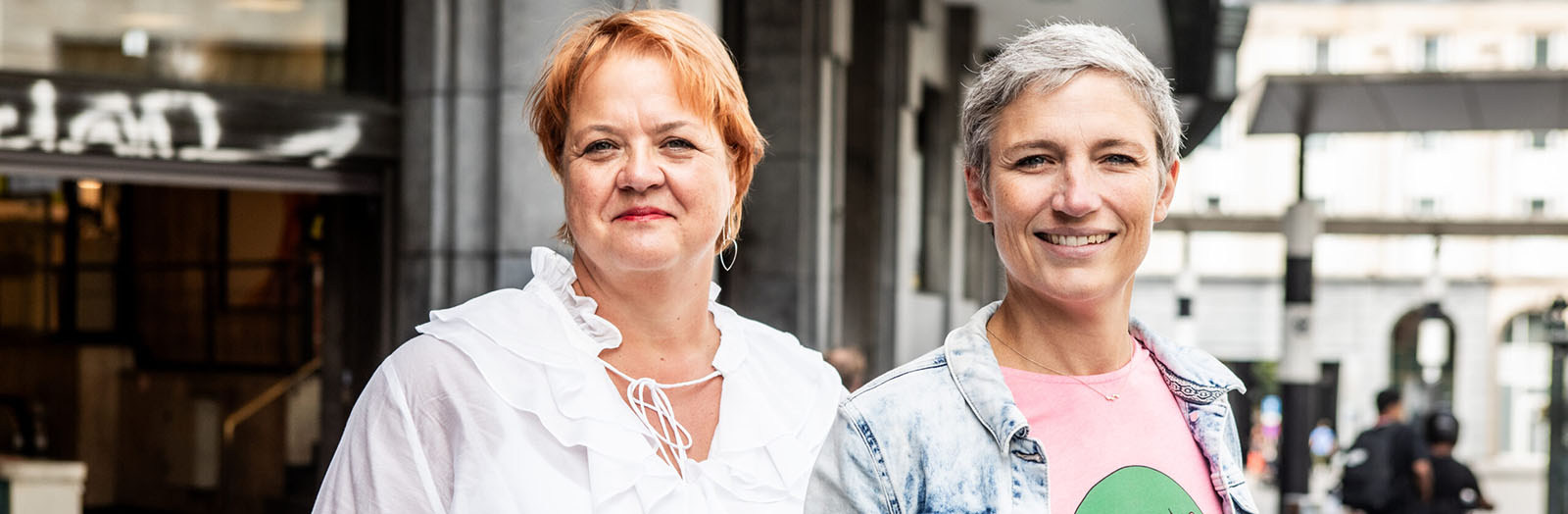
Microstart offers a practical solution for entrepreneurs who struggle to access traditional banking: microcredit paired with personalised support. The goal? To democratise entrepre-neurship and boost employment, because every viable project deserves funding. This vision is shared and backed by BNP Paribas Fortis, a long-standing partner of the initiative. In this article, Lorraine de Fierlant and Anne-France Simon of Microstart explain how their joint efforts strengthen financial inclusion for the most vulnerable groups.
In summary
- Microstart supports start-ups with microcredit and personalised guidance.
- It places special emphasis on women, who often hesitate to take the leap into entre-preneurship.
- Immigrants, jobseekers, and low-skilled individuals can also turn to Microstart for as-sistance.
- An entrepreneur funded by Microstart is 3 times more likely to secure bank credit later on.
- Microcredit ranges from €15,000 for start-ups to €25,000 for those looking to expand.
- BNP Paribas Fortis promotes Microstart through dedicated ambassadors.
What is Microstart?
Founded in 2011 with support from BNP Paribas Fortis and the European Investment Fund, Microstart offers microcredit and tailored support as an alternative to traditional bank lend-ing. This opens the door to entrepreneurship for underserved groups while addressing em-ployment challenges through financial inclusion.
Since its launch, nearly 6,200 start-ups seeking support have turned to Microstart. In 2025 alone, the organisation helped 540 projects come to life.
"A loan to a start-up is already seen as high-risk by banks but the challenge is even greater when the applicant comes from a vulnerable background," explains Lorraine de Fierlant, CEO of Microstart. "They face a kind of double penalty."
Women at the forefront
Microstart helps entrepreneurs, both men and women, turn their ideas into reality. Some start-ups have faced up to 3 bank rejections, while others never even approach a branch, convinced they lack the right credentials or connections.
This barrier is especially pronounced for women, with studies showing that fear of rejection and a more cautious relationship with money often deter them from starting a business. "By removing these obstacles, our microcredit becomes a tangible lever for entrepreneurship," explains Lorraine de Fierlant.
Beyond financing, Microstart aims to turn these women entrepreneurs into role models, inspiring confidence and ambition in others. To this end, it has forged partnerships with ini-tiatives like Funds for Good, the women-focused incubators SheDIDIT, and the High Her pro-gramme, where Microstart manages the honour-loan funds.
"In a country that aims to foster entrepreneurship, if you have a viable project, you should be able to secure its funding."
Lorraine de Fierlant, CEO of Microstart
The importance of financial inclusion
Other key groups include young people, immigrants, the unemployed, and those with low formal education. "Helping them launch and stabilise their businesses is crucial," emphasises the CEO. "But our core financial inclusion mission is to enable them to eventually transition to mainstream banking. The goal is for them not to stay with us a day longer than neces-sary."
A recent impact study found that entrepreneurs funded by Microstart are 3 times more like-ly to secure bank credit later. In some cases, Microstart replaces the traditional 'family & friends' funding round, partnering with banks or public/impact-driven organisations for co-financing initiatives.
From start-up to growth: how much can you borrow through Microstart?
Most entrepreneurs supported by Microstart launch businesses in retail, hospitality, pas-senger or freight transport, or construction. Loan limits are set at:
- €15,000 for start-ups
- €25,000 for expanding an existing business
Funds can cover initial stock, equipment like salon chairs, shelving or refrigeration for a gro-cery, or a first taxi or delivery vehicle. "We finance very tangible needs," confirms Lorraine de Fierlant.
On average, each funded project creates 1.6 jobs. This is a significant figure given the time limits on unemployment benefits.
Microstart’s ambitions
At a time when several professional microcredit providers are winding down operations, Lorraine de Fierlant’s ambition remains undiminished. She believes Microstart has the ca-pacity to double the number of microcredits granted in the very near future. "In a country committed to fostering entrepreneurship, if you have a viable project, you should be able to secure its funding," she says.
"Beyond credit, our support shifts perceptions and builds a bridge between two worlds, fos-tering a more inclusive form of entrepreneurship."
Anne-France Simon, Head of Financial Partnerships Development at Microstart
This vision aligns fully with BNP Paribas Fortis’ commitments. Since January, the bank has appointed around 40 internal ambassadors—credit specialists and branch managers. They are tasked with embedding the 'Microstart reflex' across its entire network.
Through field visits and hands-on collaboration, these bankers engage with entrepreneurs they’ve referred to Microstart. As Anne-France Simon, Head of Financial Partnerships Devel-opment at Microstart notes, "Beyond credit, our support shifts perceptions and builds a bridge between two worlds, fostering a more inclusive form of entrepreneurship."
Want to learn more about start-up financing?
For more on financial inclusion, see our 2025 Sustainability Report