

Natural disasters: prevent damage
What if a natural disaster (storm, flood, etc.) threatens your loved ones, your home, your business or your possessions? Find out what you can do yourself to help prevent damage and how best to deal with the situation if a natural disaster occurs.
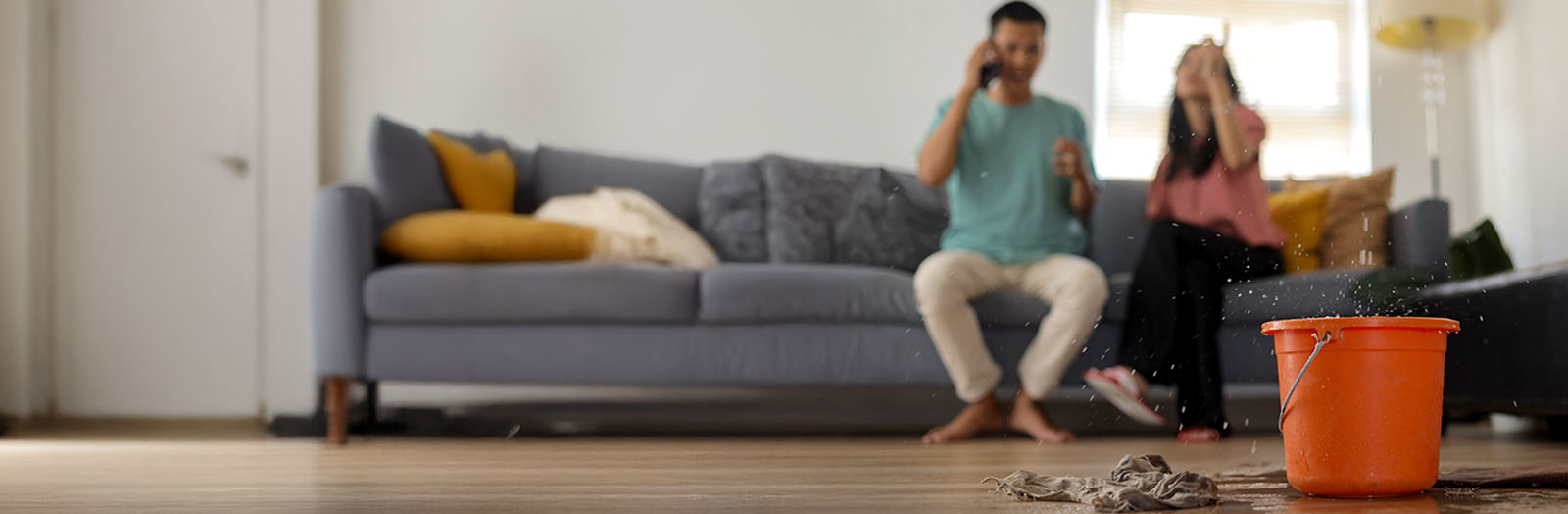
What is a natural disaster? The basics
General definition
A natural disaster is a natural phenomenon (rain, wind, hail, drought, landslide, etc.) of abnormal intensity, endangering people and infrastructure and resulting in potentially severe human and material damage.
Unfortunately, natural disasters are occurring more and more frequently in Belgium and around the world. And they seem to be increasing in frequency and severity year after year. Numerous studies attribute this phenomenon to global warming.
Different types
We distinguish between two types of natural disasters:
- Local natural disasters are events that affect one or more specific locations. For example: on Whit Monday 2022, a downpour hit the town of Landen in Flemish Brabant.
- Regional and national natural disasters are events that affect a large geographical area and/or a large number of places. Examples are the floods in July 2021 in Wallonia and the storm in February 2022 throughout Belgium.
What qualifies as a storm?
A storm has average wind speeds of more than 80 km/h for 10 minutes. This corresponds to 9 Beaufort (the maximum is 12). A storm can cause violent gusts of more than 100 km/h. These cause the most damage. A wind speed of 10 and 11 Beaufort is considered a severe storm. And a wind speed of 12 Beaufort, with gusts of more than 118 km/h, is considered a hurricane.
What you can do to prevent damage: Practical tips
General precautions
- Regularly check the general condition of your home and/or your business or office, both inside and outside. Do this at least once a year.
- Keep an eye on the weather forecast and stay alert for warnings of storms, floods or extreme heat.
- Is a potentially dangerous (weather) event expected?
- The first priority is to get everyone to safety.
- Make sure you have a first aid kit with the necessary medicines, a few bottles of water, long-life food, etc.
- Keep your important documents (proof of purchase of valuable goods, insurance and notarial deeds, etc.) in a safe place. Or take a photo and save them on your smartphone.
- Keep a torch handy, make sure your smartphone is charged (and save important phone numbers such as 112), and keep pets indoors.
- Always wait until the storm has passed completely before dealing with any damage. So don't climb onto the roof during a storm to check whether it is damaged!
Outside
- Broken roof tiles, tree branches growing too close to the windows, inadequately secured solar panels, a crack in a chimney or wall, a rattling shutter, a blocked gutter... Take immediate action to prevent further damage.
- Install a lightning rod on the roof. This will divert lightning to the ground to prevent fire or other damage.
- If a storm is forecast, lock the garden shed and secure or bring inside any objects that could cause damage (garden furniture, parasols, planters, barbecue, trampoline, etc.). Do you have a shop? Consider securing anything that is not bolted down (advertising boards, merchandise on display, etc.).
- Close the shutters and roller shutters: they protect the windows from rain, wind and impacts.
- If you cannot take shelter during a storm, do not stand under a tree or run! That increases the risk of being struck by lightning. Take small steps and shuffle. Crouch down, with your feet on insulating material (rain jacket, backpack), and protect your head.
Inside
- Close all doors, windows and other openings.
- If there is a risk that your home or business premises will flood, move valuable items (furniture, merchandise, stock) to a safe place: move them to a higher floor or upstairs. Prepare sandbags to cover holes in the cellar or cracks under exterior doors, for example.
- Unplug as many electrical devices as possible (TVs, PCs, household appliances, payment terminals, servers, etc.). You can also install surge protection to protect your devices from power surges.
- If necessary, turn off the water, gas, heating fuel and electricity.
- If there is a risk of a storm, do not go to the cellar (as it can fill up with water quickly) and stay away from windows.
- If there is a risk of lightning, do not take a bath or shower, as water conducts electricity.
Vehicle
- Did you know that a strong current can sweep away a car that is standing in just 20 centimetres of water?
- Park your vehicle in the garage or under a carport – especially in case of hail. If this is not possible, cover it with a padded tarpaulin or a blanket to limit the damage. You can also cover the windscreen with a piece of cardboard or bubble wrap.
- If you are travelling by car, lorry or van during a storm, park safely and stay inside your vehicle. The metal bodywork is a Faraday cage that protects you from being electrocuted by lightning. During a thunderstorm, do not touch the metal parts of the vehicle, as you can be electrocuted if lightning strikes.
- When it is windy, hold the door firmly when getting in and out to prevent damage to your own vehicle or other vehicles.
- Use other means of transport (bicycle, motorbike, scooter, etc.) only if it is safe to do so.
What to do in case of damage? First reflexes and useful numbers
First reflexes
- Do what you can to prevent things from getting worse, but without endangering yourself.
- Take photos of the damage before you start cleaning up. Take a general photo of the situation (around and inside the affected building) and detailed photos of damaged goods.
- If you have photos (if possible, both of the time before the damage occurred and afterwards) and proof of purchase for the damaged goods, the insurer will be able to assess the damage more quickly and easily. Do not throw away the damaged objects/merchandise.
- If you are evacuated from your home or workplace, follow the instructions of the emergency services. Turn off the gas and electricity. If possible, store hazardous or polluting products in a safe place. Only take the bare essentials with you (a change of clothes, any medication you take daily, your wallet, insurance papers, other important documents, etc.). And don't forget your pets.
Useful numbers
Call 112 if someone is injured or people are in danger.
In the event of severe weather, (imminent) flooding, etc., the FPS Interior – which is responsible for assisting the population and crisis management – activates the number 1722. Call this number to request a non-urgent intervention by the fire department, for example, when no lives are at risk.
Contact your insurer in case of damage to your home and/or workplace or to your vehicle.
Are you insured with BNP Paribas Fortis? Do you want to know how to submit a claim and whom to contact, depending on the type of damage?
Also know that you can always count on us for assistance, regardless of the situation you are dealing with.
Filing a claim? We are here to help you.
More information